
Lolly's Recycling Shines at Tubac Center of the Arts in Innovations 2026
Art often asks a question before it offers an answer. Lolly’s piece "Recycling" does exactly that. It asks what it means to care for the natural world while also being part of the force that changes it.
The work has been accepted into “Innovations 2026” at the 35th Annual Open Juried Exhibition, held at the Tubac Center of the Arts in Tubac, AZ. That acceptance is a meaningful milestone. Open juried exhibitions bring together artists from different places, media, and points of view. Selection is not automatic. Work must hold its own in front of jurors who look for skill, originality, clarity, and presence.
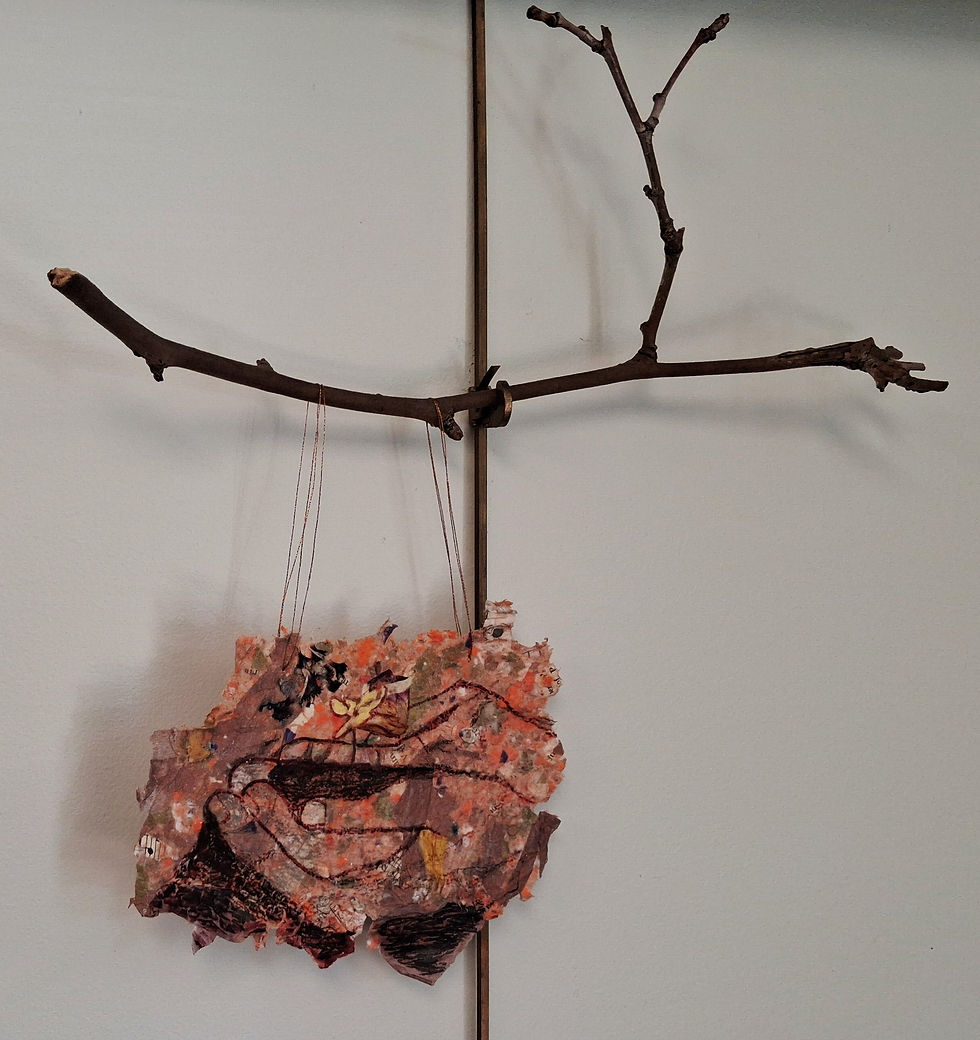
For Lolly, “Recycling” offers all of that through a quiet but powerful image: a gardener’s hands nurturing a small plant, set within handmade paper embedded with dried flowers, thin filament, and wood. The piece feels delicate, but its message is strong. It speaks to environmental awareness, human responsibility, and the complicated role people play in both harming and healing nature.
Acceptance into Innovations 2026 marks a significant achievement
Being accepted into a juried exhibition matters because the process adds a layer of recognition beyond personal creation. The artist makes the work, but a jury decides whether it enters the public conversation of the show. That selection signals that the piece has something to say, and that it says it with enough clarity and craft to stand among other strong submissions.
The 35th Annual Open Juried Exhibition carries added weight because of its long-running history. Annual exhibitions build trust over time. They become places where artists can take risks, where viewers can encounter new approaches, and where regional and national creative voices meet in one shared space.
The setting also matters. The Tubac Center of the Arts sits in Tubac, Arizona, a place known for its deep connection to art, craft, landscape, and cultural exchange. Tubac has long drawn artists who respond to the textures of the Southwest: desert light, rugged terrain, organic materials, and the visible impact of human life on the land.
Within that context, Lolly’s “Recycling” feels especially at home. It does not present nature as decoration. It treats nature as something living, vulnerable, and close enough to touch. It also reminds viewers that environmental care begins with small gestures, often with the hands.
“Recycling” turns delicate materials into a direct message
At first glance, “Recycling” may invite viewers in through its surface. Handmade paper has a different presence from manufactured paper. It carries irregularities. It holds fibers, texture, and traces of the process that made it. When dried flowers are embedded into that paper, the material becomes more than a surface. It becomes part of the story.
The dried flowers suggest beauty, decay, preservation, and memory all at once. They were once alive. Now they remain visible in another form. Their presence speaks directly to the idea of recycling, not only as a practical act, but as a cycle of transformation.
The drawing of the gardener’s hands adds the human element. Hands are intimate. They show effort, age, tenderness, and intention. In this piece, the hands nurture a small plant. The image is simple, but the meaning reaches far beyond gardening.
A small plant can stand for many things:
A repaired ecosystem
A personal act of care
A future that still needs protection
A reminder that growth depends on attention
The plant is not shown as a grand forest or a dramatic wilderness. It is modest. That choice makes the work more personal. It brings the environmental message down to human scale.
“Recycling” also incorporates thin filament and wood, adding structure and contrast. The filament introduces a fine linear quality, almost like a trace, root, thread, or connection. Wood brings the viewer back to the organic world. Together, these materials create tension between fragility and support.
The result is a work that feels both tender and alert. It does not lecture. It asks the viewer to look closely, then look again.
The gardener’s hands reveal the fragile bond between people and nature
The central drawing of the gardener’s hands nurturing a small plant gives “Recycling” its emotional center. It is an image of care, but it also carries unease. A plant held by human hands can be protected, moved, planted, damaged, or controlled. That dual meaning is part of what makes the work compelling.
Humans depend on nature for food, air, water, shelter, and well-being. At the same time, human choices often place stress on natural systems. The relationship is not simple. Lolly’s piece recognizes that complexity without turning away from hope.
The hands in the artwork do not dominate the plant. They appear to support it. That distinction matters. The image suggests that people can act as caretakers rather than owners. The small plant becomes a symbol of life that needs space, patience, and respect.
This theme feels especially relevant now, as environmental awareness continues to shape conversations about daily life. Recycling, conservation, gardening, restoration, and reuse are no longer fringe ideas. They are part of how many people think about responsibility.
Yet the piece does not reduce environmental care to a slogan. It shows care as an action. A gardener bends toward the earth. A seedling needs water. Paper can be made by hand. Flowers can be preserved. Wood can be incorporated with intention. These choices create a visual language of attention.
That attention is the heart of the work.
Materials deepen the theme of renewal
One of the strongest aspects of “Recycling” is the way its materials echo its subject. The piece does not merely depict renewal. It is built from materials that suggest reuse, transformation, and natural cycles.
Handmade paper carries a human touch. It reflects labor and patience. Unlike a flat commercial surface, it has small variations that make each area distinct. Those variations reinforce the idea that nature does not repeat itself perfectly. Every leaf, fiber, petal, and grain has its own character.
The dried flowers hold another layer of meaning. They are fragile remnants of living plants, preserved in the paper rather than discarded. Their presence turns the surface into a record of life. They also create a subtle tension. Flowers are often associated with growth and beauty, but dried flowers also point to passing time.
The thin filament adds a different kind of delicacy. It may suggest roots, veins, threads, or the invisible lines that connect human action to environmental effect. Its fineness matters. It can feel strong and fragile at the same time, much like ecological relationships.
Wood grounds the piece. It brings weight, natural origin, and material history. Wood comes from trees, but in art it can become frame, support, mark, or form. Its use in “Recycling” strengthens the link between the artwork and the physical world it asks viewers to consider.
Together, these materials do not feel accidental. They help the piece speak in more than one way. The image tells one story. The materials tell another. When those stories meet, the theme becomes richer.

The work explores the duality of human impact
Environmental art often faces a challenge. If it focuses only on harm, viewers may feel overwhelmed. If it focuses only on hope, it can feel incomplete. “Recycling” finds strength by holding both ideas at once.
The gardener’s hands represent care, but they also remind viewers that nature is often placed in human hands because human activity has disturbed it. The handmade paper contains flowers, but those flowers are no longer living in the ground. The wood connects to forests and growth, but wood also carries the history of cutting, shaping, and use.
This is the duality at the center of the piece: humans are capable of damage and repair.
People create waste, but they can also recycle. People clear land, but they can also restore habitats. People consume natural resources, but they can also choose restraint. Lolly’s artwork does not pretend that these choices are easy. It suggests that awareness starts with noticing the relationship.
The title “Recycling” adds another layer. Recycling is a familiar word, often tied to bins, sorting, and household routines. In the artwork, the word becomes broader. It points to cycles of use and renewal. It asks whether people can reimagine what has been discarded, overlooked, or taken for granted.
This broader meaning is what gives Lollys Recycling Shines at Tubac Center of the Arts in Innovations 2026 its resonance as more than exhibition news. It is also a reminder that art can slow people down long enough to see familiar ideas through a new lens.
Why this piece belongs in a show about innovation
The word “innovation” can suggest technology, speed, or novelty. In art, it can mean something quieter and more lasting. It can mean finding a fresh way to combine materials, images, and ideas so that viewers feel something they did not expect.
“Recycling” fits that spirit through its blend of drawing and material construction. The work brings together handmade paper, dried flowers, filament, wood, and a carefully chosen image of nurturing hands. These elements do not compete. They build a single experience.
The work also expands what environmental art can look like. It does not rely on dramatic imagery of disaster. It does not need a sweeping scene. Instead, it focuses on a small act of care. That restraint gives the piece power.
Viewers may walk away thinking about the materials in their own lives. What gets saved? What gets thrown away? What can be transformed? What does care look like when it becomes a daily practice rather than a distant ideal?
Successful art does not always answer those questions. Sometimes it gives them shape. “Recycling” does that through touch, texture, and image.

Environmental awareness becomes personal through art
Environmental issues can feel too large to grasp. Climate, waste, habitat loss, and resource use all involve systems that extend far beyond any single person. Art can make those issues more personal by turning them into something visible and felt.
That is what “Recycling” does. It brings environmental awareness into the space between two hands and a plant. It asks viewers to consider care not as an abstract value, but as a physical act.
The handmade quality of the piece reinforces that message. Nothing about it feels detached. The surface, embedded flowers, drawn hands, filament, and wood all carry signs of touch. The work reminds viewers that human impact is not only measured through industry or policy. It also appears in everyday choices.
A person can harm without intending to. A person can help without making a grand gesture. That truth gives the piece its emotional balance. It recognizes responsibility, but it also leaves room for renewal.
In a juried exhibition setting, this kind of work can create meaningful dialogue. Some viewers may respond first to the craft. Others may connect with the environmental theme. Others may see the gardener’s hands and think of family, land, memory, or care passed between generations.
That range of possible responses is a strength. The artwork does not close itself off. It remains open enough for viewers to enter through their own experiences.
A well-earned moment for Lolly’s work
Lolly’s acceptance into “Innovations 2026” at the 35th Annual Open Juried Exhibition is a moment worth celebrating. It places “Recycling” in a respected arts setting and invites a wider audience to spend time with its materials, message, and quiet force.
The piece stands out because it understands that environmental awareness is not only about warning. It is also about relationship. It asks how people touch the world, what they preserve, what they waste, and what they choose to nurture.
“Recycling” offers a hopeful but honest vision. Human hands can damage the natural world, but they can also tend it. They can discard, but they can also remake. They can take, but they can also give care back.
That is the lasting power of Lolly’s work. It turns a small plant, a sheet of handmade paper, dried flowers, filament, and wood into a thoughtful reflection on responsibility. In the setting of Tubac Center of the Arts, it becomes part of a larger conversation about creativity, place, and the future people choose to grow.


Comments